


 WeChat Official Account
Analysis and Optimization Design of Wind Turbine Cooling Performance
Generator cooling fan performance analysis and optimization design
1. Overview
In this project, the fluid simulation analysis is carried out for the heat sink fan of 8MW generator, and the flow-performance curve is obtained by using the computational fluid dynamics (CFD) method; on the basis of this, the optimized design of the fan blade line shape is carried out with the goal of improving the output pressure of the fan at the specified flow rate. The main content of the project is divided into the following three parts:
Geometric shape acquisition;
Fan fluid simulation analysis to obtain the flow-pressure curve;
2.Geometry Acquisition
The fan is a snail-less, rearward facing configuration and the overall geometric parameters are measured as follows:
3. Fan performance analysis
3.1 The rear cross section of the heat exchanger is set as the computational inlet and the cross section where the airflow enters the interior of the generator is set as the computational outlet, and meshing is carried out for the entire flow field domain, with a total number of meshes of about 3.3 million.
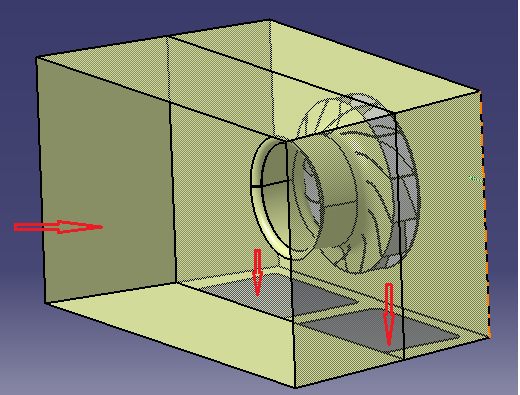
Fig. 3 Import and export settings
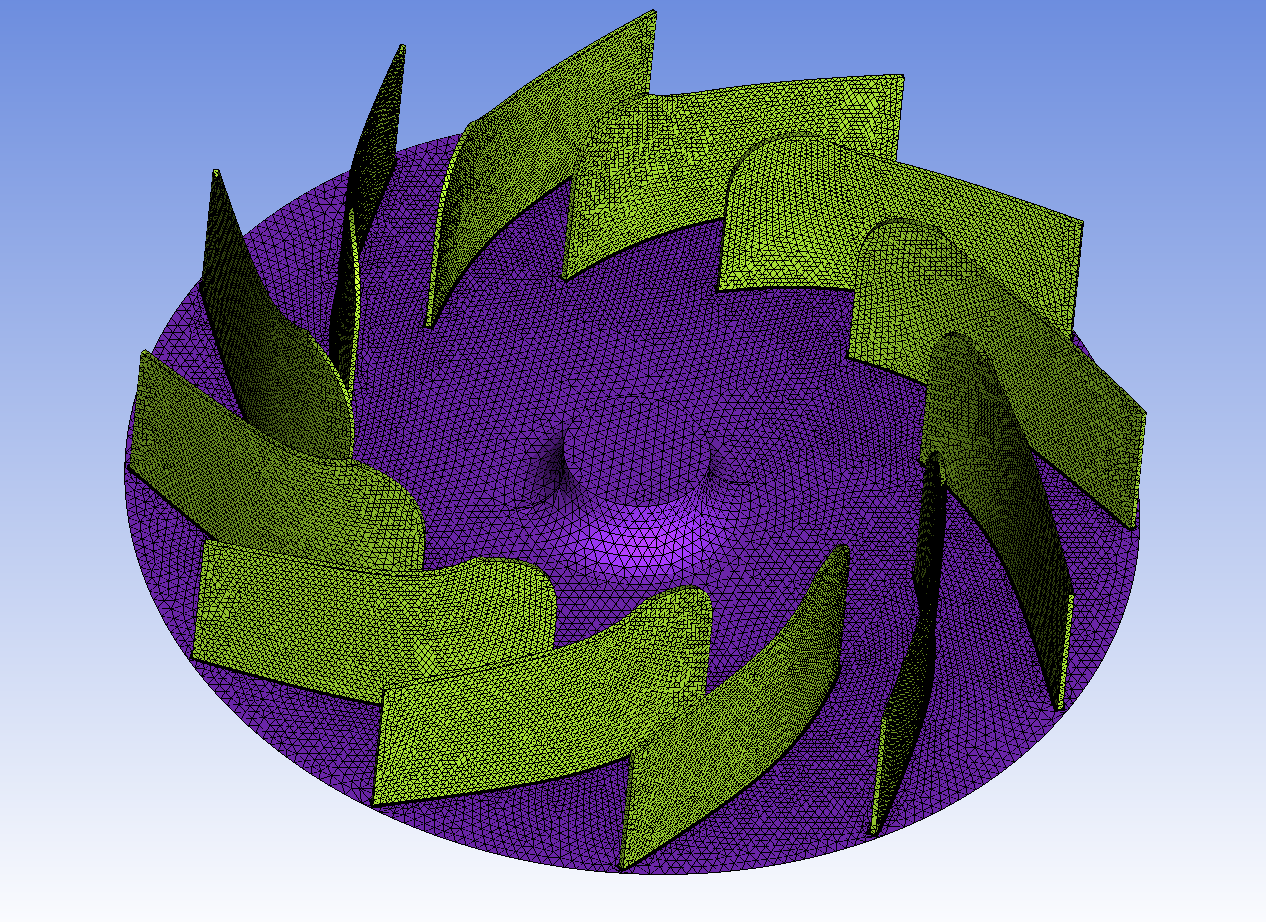

Fig. 4 Wind turbine meshing
Simulation setup parameters:
Table 2 Simulation settings
|
ID |
Parameter |
Name |
Unit |
Value |
Remark |
|
1 |
air density |
ρ |
kg/^3 |
0.997 |
|
|
2 |
Outlet reference air pressure |
P0 |
bar |
1.001 |
|
|
3 |
rotor speed |
ω |
rpm |
2890 |
|
|
4 |
entrance flow |
Flow |
m^3/hour |
4000~20000 |
|
4. Simulation results
4.1 Performance curve
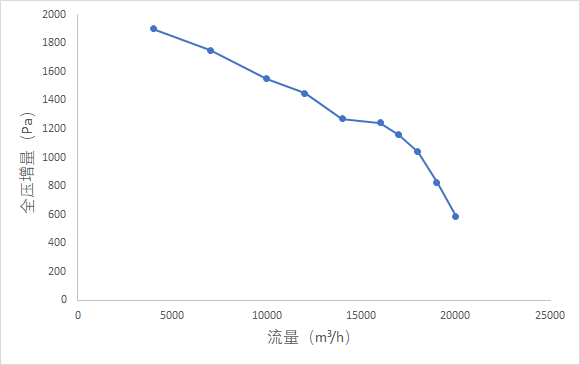
Fig. 5 Flow rate-full pressure curve
4.1 Flow field analysis
The distribution of pressure, velocity, and streamlines in the characteristic cross section inside the fan cavity is shown in Fig. 6.
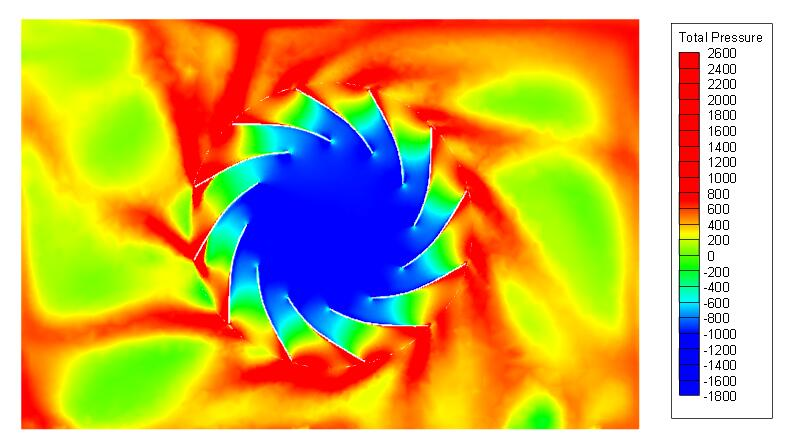
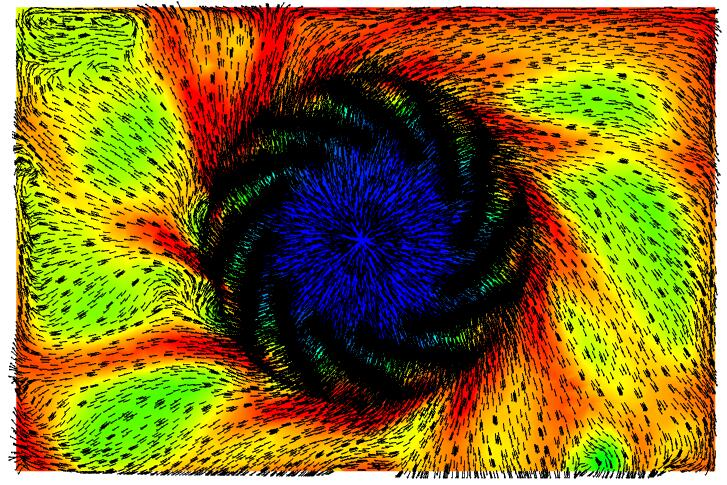
(a)全压 (b)风轮剖面速度矢量
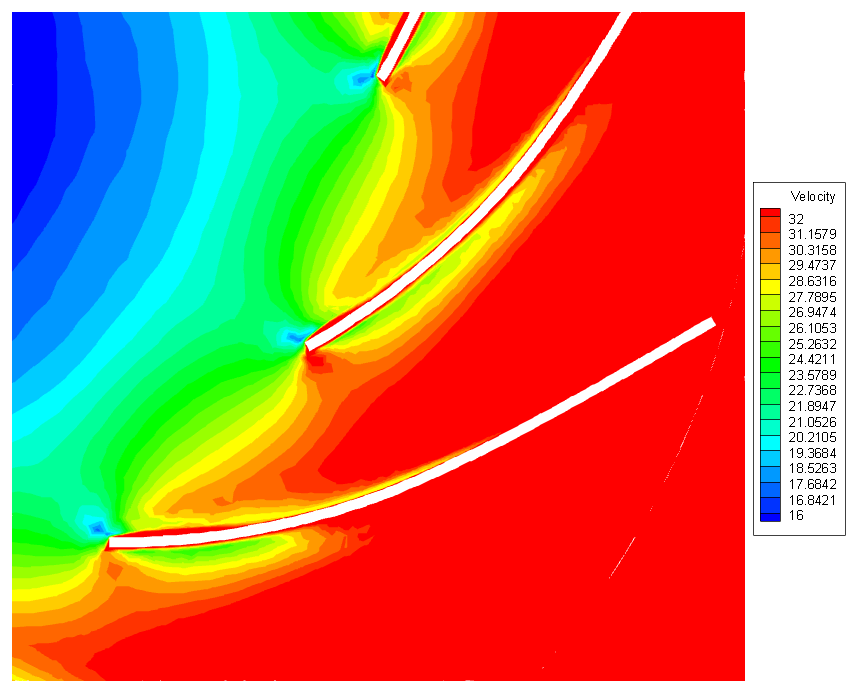
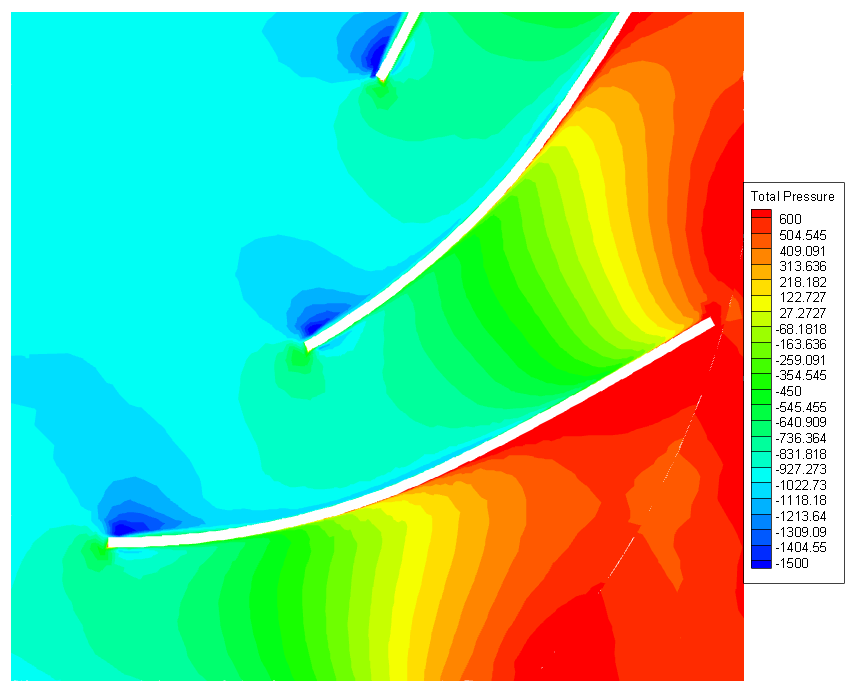
(c) Local velocity distribution (d) Local full pressure distribution
Phone
No.8 Liuyanghe Road, Xinbei District, Changzhou City, Jiangsu, China

Scan
WeChat Official Account
Powered by: www.300.cn | Tags